We can thank Robert Bosch for developing electronically controlled engine fuel injection systems which opened the way for engines to meet emissions and fuel economy mandates. The development of the
oxygen sensor feedback system was a major improvement, and finally the development of the three way catalytic converter system was the "coupe de grace". Later OBD II systems are a further refinement of this
basic system. Fortunately for enthusiasts of interesting older vehicles, the early systems are relatively simple and amenable for improvement using later technology.
The original BMW M3 (the "Real M3" to some enthusiasts) is an example of an early Bosch Motronic engine control system. One of the areas offering improvement is replacing the old style Bosch "barn door"
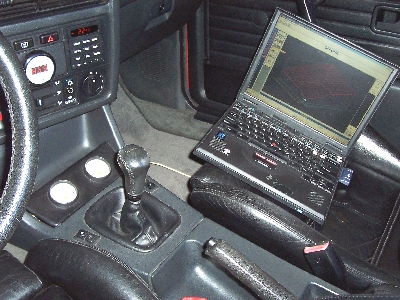
airflow meter (AFM) with a later less restrictive airflow meter such as a mass airflow sensor (MAF). However, on my M3 I installed an alpha-N (AN) type control system that doesn't use any airflow measuring device.
The AN system determines engine load from a combination of the throttle angle (alpha) and engine speed (N=rpm). The system electronics receives these inputs and sends a calculated "load" signal to the engine computer.
The map of throttle angle and engine speed operating points is is adjustable at each point for fuel delivery. By utilizing a wideband oxygen sensor which measures the air-fuel ratio operating condition of the engine, the
fuel mixture across the load spectrum can be tuned for proper running. After tuning, the original oxygen sensor is connected to restore the system feedback loop. Because the original engine ECU is used, all of the cold
starting, acceleration and other compensations of the original system are still operational. This systems works quite well and results in an improvement in power and a great improvement in driveability. Emission performance
is maintained.
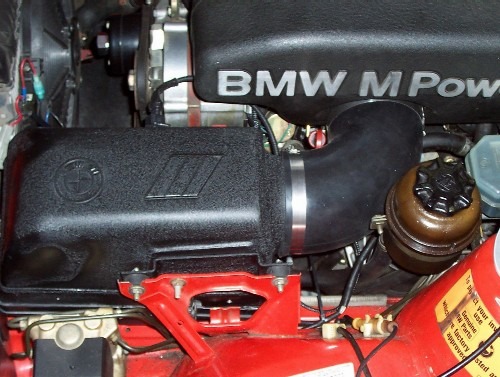
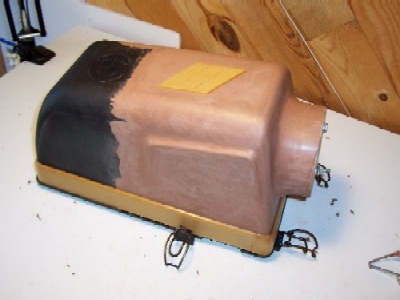
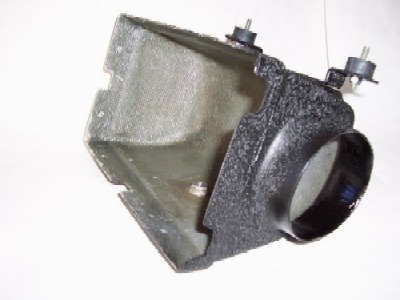
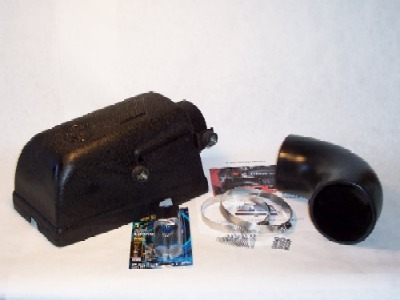
However, on the M3, deleting the AFM requires restoring the air path from the air cleaner to the air plenum on the engine. To accomplish this I developed a special upper airbox. It uses the mounting flange portion
of the original box so that the new airbox can be re-mounted to the lower airbox. In this way the original cold air intake system is maintained and the original air filter element can be used. A larger, less restrictive
hose connects the airbox to the plenum. A bung in the side of the airbox for an intake air temperature sensor completes the transformation.
Men's Washington Redskins New Era Gray Super Bowl XXVI On The Fifty Sport Knit Hat,'47 Brand New York Giants Women's Big Time T-Shirt - White/Black.Mens Denver Broncos John Elway Majestic Royal Blue #7 Hall of Fame Retro Action T-Shirt,Women's Indianapolis Colts '47 Brand Royal Sparkle Clean Up Adjustable Hat
Cheap Charlie Whitehurst Jerseys.New England Patriots WinCraft Primary Logo Pin,Houston Texans 50'' x 60'' Marque Fleece Throw Blanket - Red.Dallas Cowboys Black Southpaw Backpack,Women's Pittsburgh Steelers G-III 4Her by Carl Banks Black Shutout Pullover Hoodie,Toddler Chicago Bears Navy/Navy T-Shirt & Hoodie Set.New England Patriots Youth Scribble Time Hoodie - Red,Girls Youth Detroit Lions Pink Slouch Basic Adjustable Hat,Nike New York Giants Slant Sideline Performance T-Shirt - Royal Blue/White/Gray.Men's Oakland Raiders Klew Black Gradient Shorts,Men's Chicago Bears New Era Navy 1985 Champs Collection Sweater 9FIFTY Adjustable Hat,Women's Dallas Cowboys Roger Staubach White Retired Player Jersey
NFL Jerseys Cheap.Men's Baltimore Ravens New Era Purple/Heather Gray Classic Cover Cuffed Knit Hat,Men's Jacksonville Jaguars Black No Huddle Long Sleeve T-Shirt,Cincinnati Bengals 3-Piece BBQ Set
2016 Tennessee Titans Jerseys For Sale.Men's Seattle Seahawks New Era Gray/Graphite Gold Collection Original Fit 9FIFTY Snapback Adjustable Hat,Men's Detroit Lions New Era Graphite/Gray Gold Collection Knit Hat,Women's San Francisco 49ers Junk Food Scarlet Time Out Tank Top
Tennessee Titans: 2016 Season Predictions